
“You probably won’t even get your feet wet,” the Ranger said as he handed us a permit and a bunch of wag bags. “The conditions in Paria Canyon are unusually perfect. The low chance of rain tomorrow has cleared, the temperatures are warming, and the reliable springs are all flowing.” He saved the best for last. “And, the Paria River is running low—with some rock hopping you probably won’t even get your feet wet!” Andrew (“Camel”), our trip leader, beamed and Logan and I (“Spider-Man”) broke out companion smiles. How lucky we felt!
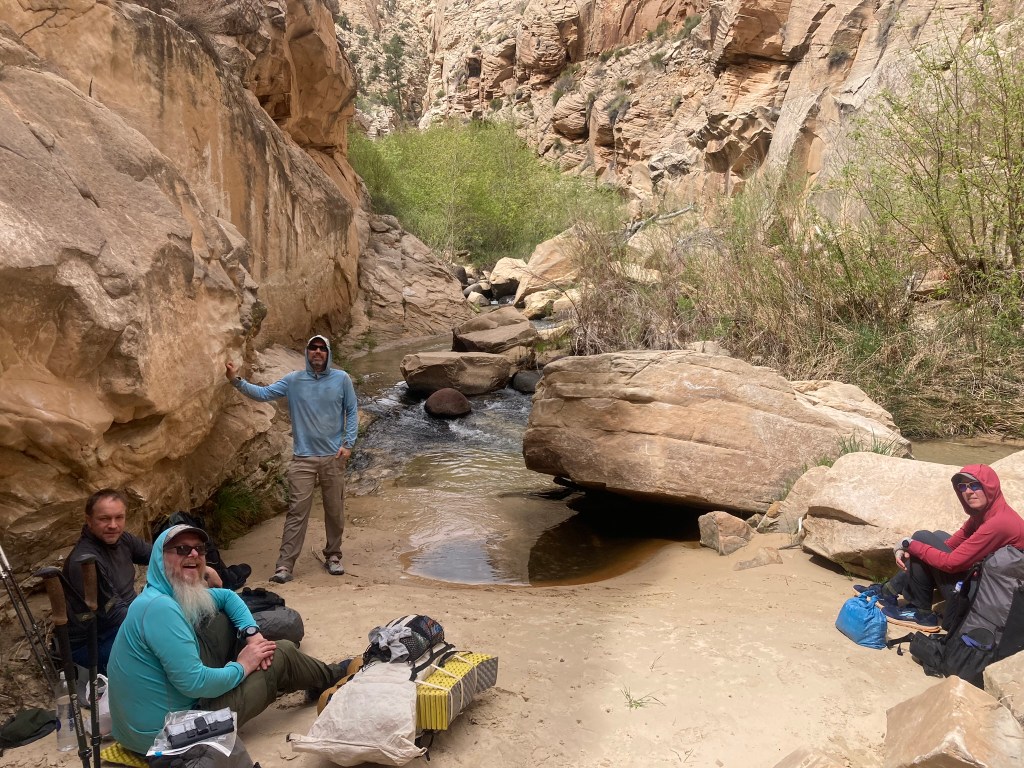
We were supposed to have hiked the super-popular Paria last year. Unfortunately, not everyone who wants to backpack the Paria Canyon may do so. There is too much demand for this trek. A group must win a permit in a lottery and we weren’t Vegas-lucky last year. Instead, we hiked “the Maze” in the Canyonlands National Park as a more-than-adequate consolation prize. Little did we know how lucky we were! Last year featured an unusual cold snap and high running water. Had we won a permit for Paria that year we probably would have been unable to complete the track due to the oppressive conditions.
As we walked away from the Ranger station to spread the good news to our other two companions on this adventure—Steve (“Baconator”) and Holley (“Banshee”)—I remarked to Camel how odd it was that the Ranger was not wearing a uniform. We both just shrugged. He gave us our permit and wag bags and that was all we needed.
PRO TIP: “Wag bags” are mandatory on this trip. Yes, one must carry out one’s own human waste. Yuck! You can avoid the malodor by storing used wag bags in odor-proof bags like the liners for Ursacks and then placing them into a nylon bag.
PRO TIP: When backpacking, be wary of hiking with someone with the trail name “Banshee.” I learned that a “banshee” is a spirit in Greek folklore whose presence warns a family that one of them will soon die!
Camel has been posting DCUL week-long tracks in the southwest for years. For this year he planned a Utah/Arizona Paria thru-hike, plus a series of overnight trips to the nearby canyons. On the way out and back from the airport in Las Vegas, we would sleep in BLM land, car-camping-style. Thus, from the moment our flight landed in Vegas until the night before we returned to D. C., we’d not sleep in the indoors—or feel a shower—for 10 days.
“Ouch! Oh, [shoot]!” Logan shouted as he scurried from his tent to Camel. “A scorpion stung me!” Camel, who had extensive wilderness first aid training, consulted a medical book he had in the car. While looking up “scorpion stings” in the guide, Logan worriedly probed at the site of the sting. Since he said he wasn’t yet feeling any effects from the sting, I felt comfortable giving him some good news to maintain his spirits and ward off shock. “Do you realize, Logan,” I said, “if you survive this scorpion attack, you could earn the trail name “Scorpion?” Banshee excitedly confirmed this. “That would be a pretty badass trail name, Logan!” she said. Logan just shot us a look, then turned to Camel who gave him the good news. He did not need medical attention unless he developed a reaction—and he clearly wasn’t. We resolved to monitor him before we began hiking; and had some time to do so as we positioned our cars for the shuttle for our point-to-point hike through Paria Canyon.
SPOILER ALERT: Logan (“Scorpion”) survived his scorpion sting.
PRO TIP: When camping in the desert, always shake your shoes before putting them on your feet! Scorpions seem to like sleeping in shoes.
(Much to my disappointment, Logan formally rejected this trail name of destiny. He said it sounded like he was “trying too hard.” However, I’ll exercise literary license in this Trip Report and will refer to him here as “Scorpion”).
PARIA CANYON

We immediately began our trip with the highlight—Paria Canyon. After setting up the car shuttle with one car at Lee’s Ferry along the Colorado River near the mouth of the Grand Canyon at the southern terminus, and the other at the northern terminus of White House, we were ready. We’d hike southbound from White House to Lee’s Ferry, following the Paria River downstream through a portion of the Buckskin Gulch slot canyon.
PRO TIP: Never enter tight canyons—especially slot canyons—unless there is a zero chance of rain in the watershed. Rain can cause flash flooding, and there is no way to outrun the flood or climb up the high, smooth canyon walls to escape. Most who die in these canyons usually do so from the blunt force trauma of being hit by debris before they have the chance to drown. Our group confirmed the weather forecast very carefully.
We started the hike by walking down to the river through deep snowy powder sand, just like the beach at Ocean City. We saw that we immediately had to cross it. With no rocks available to hop, and the low flowing river too wide to jump, we hiked up to an apparent high water route to keep our feet dry. Camel noted it was too early and cold to get wet feet. However, the trail quickly descended back to the river just a bit downstream from our prior meeting. It was just as impassible. “I guess we have to ford this one,” Camel announced has he led us across the river, our feet sloshing in the water up to our ankles.
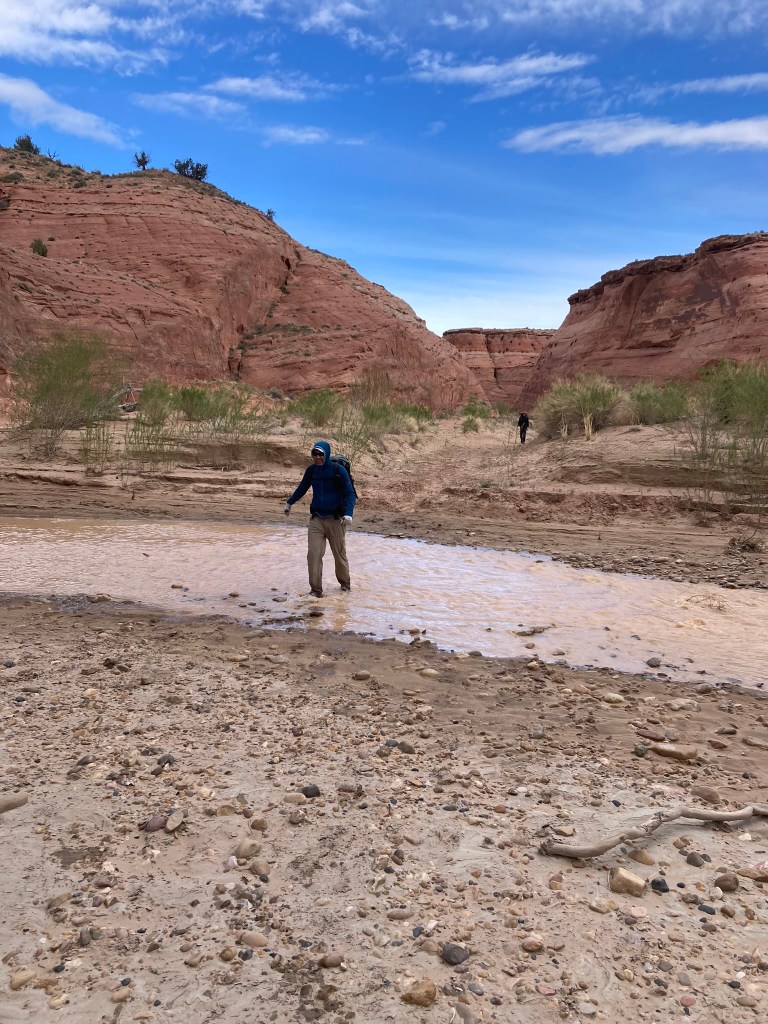
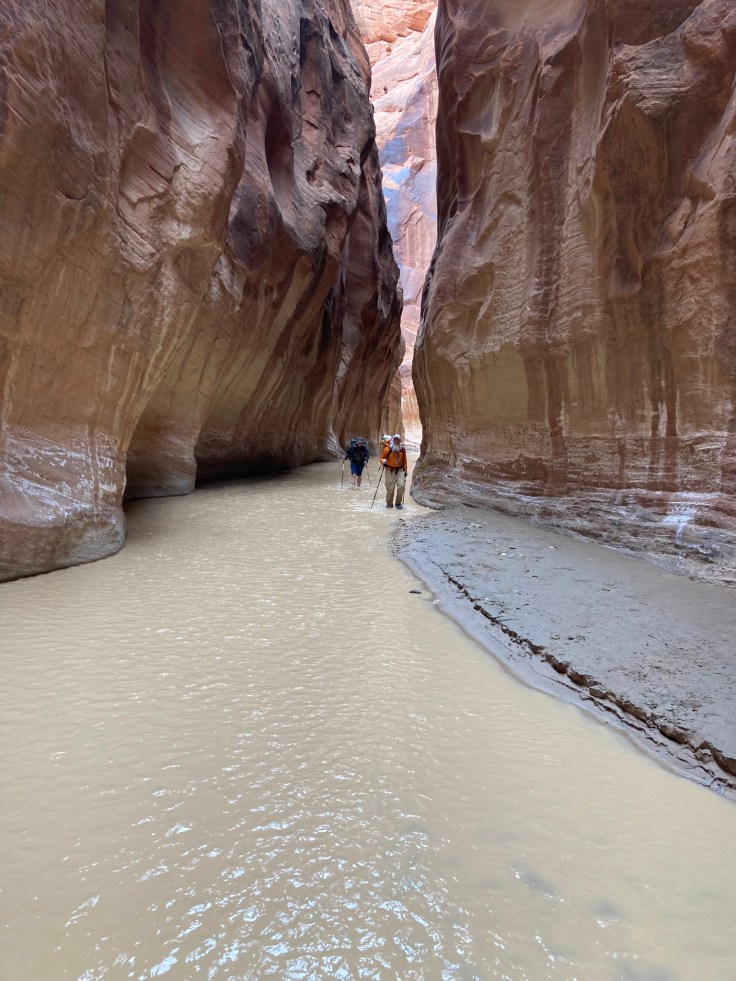
The Paria River is excessively silty, looking much like coffee with a lot of cream in it. One could not see the bottom to assess the depth. We quickly learned it was only ankle deep almost the entire way with a soft sand bottom. The water felt cold, but not freezing. We wet-crossed the meandering Paria four more times when I realized it: the Ranger was punking us with his “no wet feet” prediction. No one does this trek in the spring with dry feet! Well played, Mr. Ranger. You got us.
For the ensuing two and a half days our trek had the same pattern: cross the Paria, climb 3-10 feet up its bank, cross overland across the sandy ground to cut off a bend of the meandering river, and climb back down to the river. Our feet were never dry. On the overland stretches, we’d often have to fight the overgrown brush for a bushwhacking experience. Wearing short pants, my shins accumulated so many scratches from the brush they turned red. Occasionally, we’d have to walk in the river around a bend. I alternated between lifting my feet out of the water at each step, and just walking with my feet fully submerged. I was not sure what approach took the most effort, but the latter minimized splashing.
Along the way, we saw the dramatic walls of the canyon. Sometimes they were extremely wide. Sometimes they were very narrow. They were always in sight. This was an extremely easy hike. I only raised my heart rate a few times when the trail climbed high above the river and we walked toward the walls of the canyon.
Many people who thru-hike the Paria do so in 4-5 days. So, we DCULers completed the trail in 2.5 days—and that was only because we wanted to savor the experience. We could have done it in a day. We have hiked the 44 mile “four state challenge” several times—hiking across the borders of Virginia, West Virginia, Maryland, and Pennsylvania all within 24 hours. So, while I would not exactly call this a “Pro Tip” for the general public, for those DCULers reading this who fail to get a Paria Canyon overnight permit, thru-hiking this Canyon in a single day would seem to be easier than the four state challenge. We could call it the “Paria Canyon Challenge!”
We camped two nights along the banks of the Paria. Despite all the water we crossed, and our constantly wet feet, we could not drink from the river. It was so silty it would clog even the best filter. Fortunately, there were several well-mapped springs along the way with water dripping from or along one canyon wall or the other.

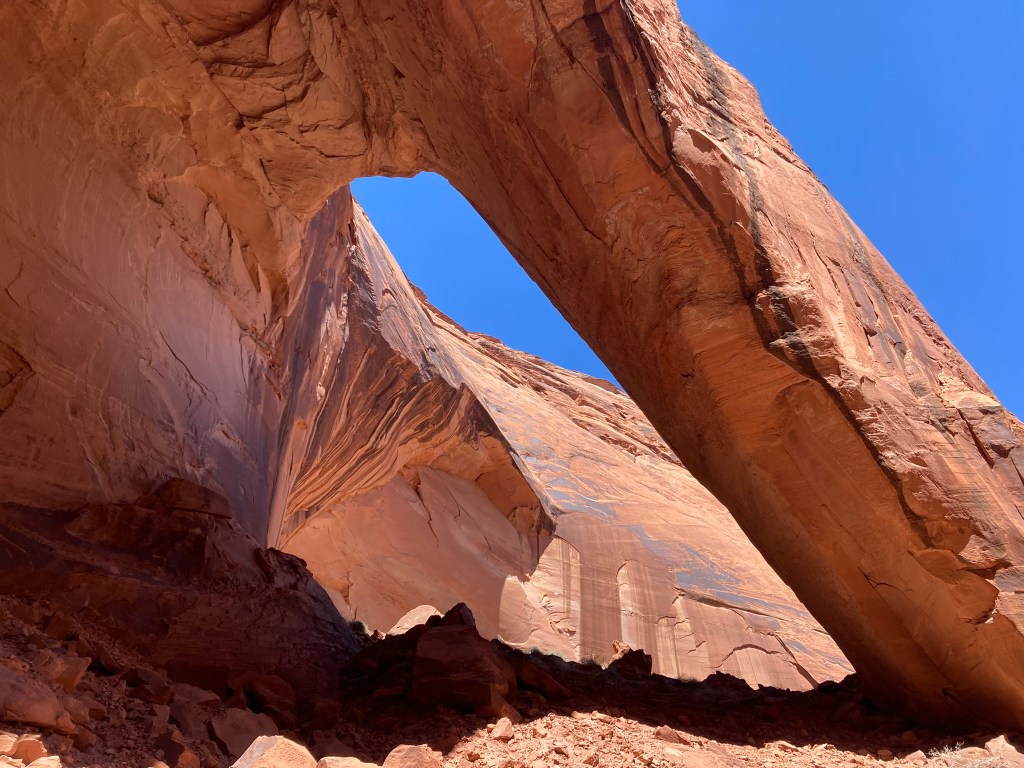
One highlight along the trail was a long side trip up an interesting Canyon to a giant arch.
Another highlight was at the midway point, through Buckskin Gulch-a dramatic slot canyon.
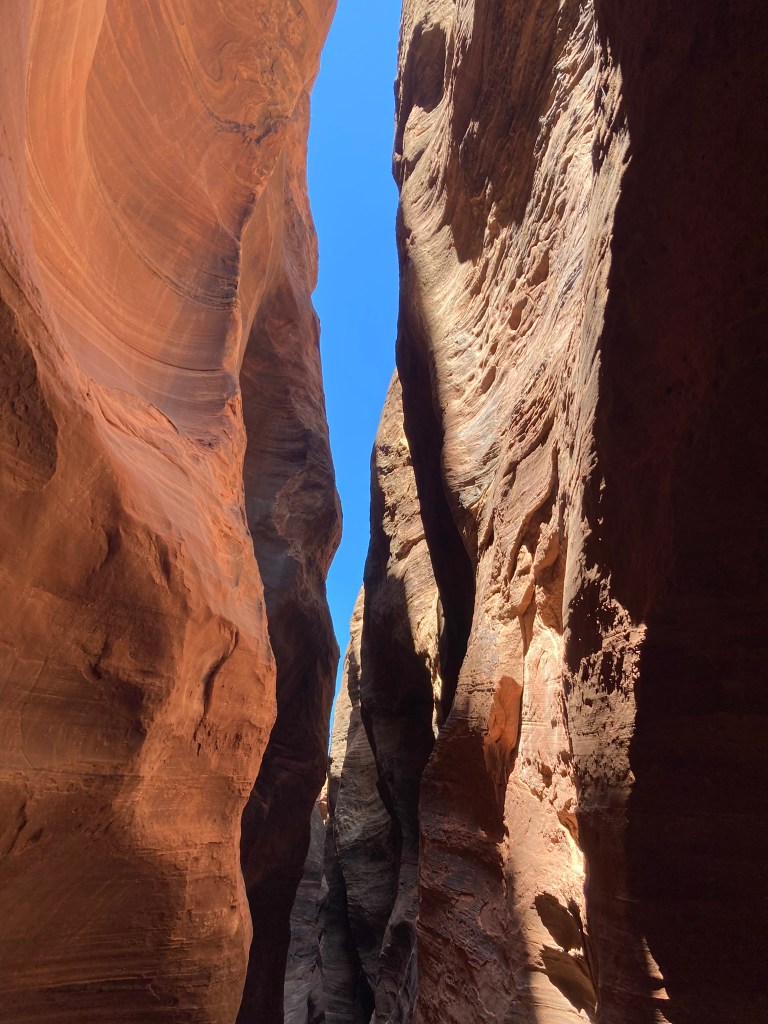

The constant sloshing through the water at first cooled the feet and drained quickly without sandy residue. However, through the Buckskin Gulch section, the only walking option was through the Paria. The water turned cold. Then, it turned freezing. I took a break at the confluence of the Paria and Buckskin Gulch canyons and removed my shoes and socks. I knew my feet felt numb, but seeing the onset of frost nip alarmed me. My toes and the bottoms of my feet were white with cold. I dried them and tucked them in turn behind my knees to warm them. Scorpion and Baconator, who had been hiking alongside me, also stopped for a rest and regrouping. Banshee and Camel soon arrived. Banshee, complaining about her frozen feet, worried that stopping would only make them colder. Camel suggested an up and back excursion in Buckskin Gulch Canyon to give our feet a break from the water. The water in Buckskin was a mere trickle. Baconator chose to rest at the confluence. Banshee began the side trail with Camel, Scorpion, and me, but quickly changed her mind, wished us well, and continued sloshing down the river. I’m unusually sensitive to the cold on my extremities, so I put on a fresh pair of wool socks and, over them, neoprene socks, before putting on my super-saturated, sandy shoes.
PRO TIP: Bring neoprene socks when doing extensive hiking in the canyons of Utah and Arizona. Wow! They saved my trip! They don’t keep your feet dry, but they keep them warm. They also cushioned against sand incursion within the shoes. Bottom line: my comfort improved dramatically once I put them on.
We hiked up Buckskin and enjoyed the canyon that was both familiar and different. The slot canyon experience remained a novelty. However, much to our delight the ground was increasingly drier. We could easily walk along or through the wash without getting our feet any wetter. Out of the water, and in my neoprene socks, my feet fully warmed and I could feel my toes well, much to my delight. After a time, we turned around and walked back to the confluence and continued down the Paria.
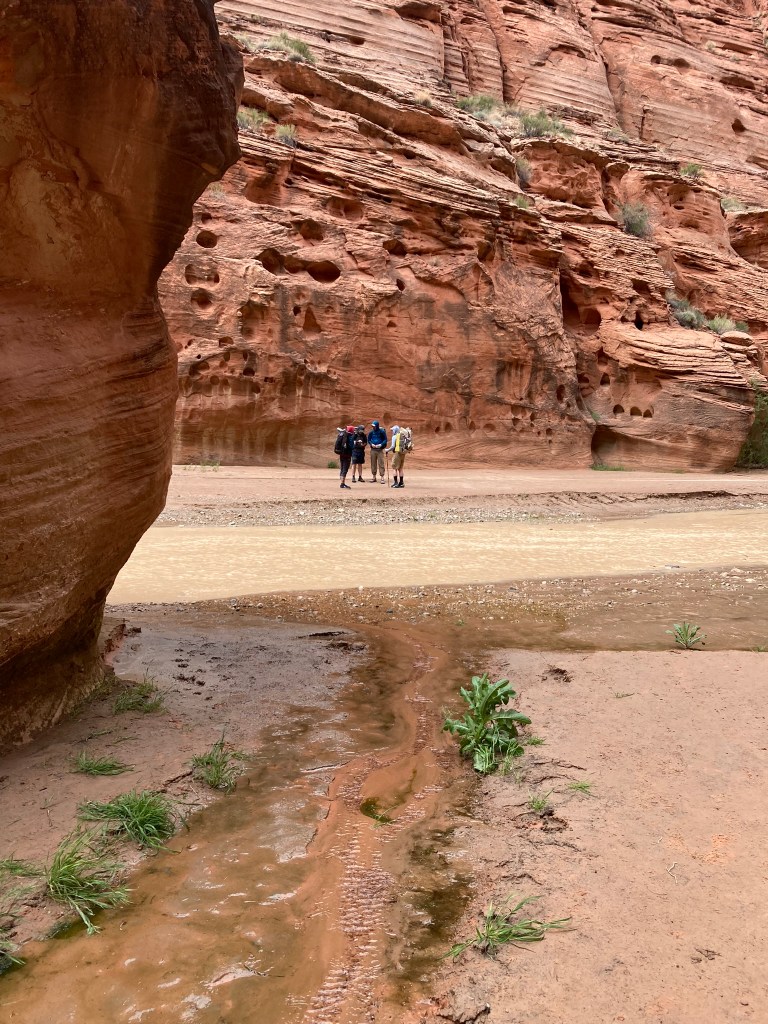
The second half of our trek featured two highlights. On this portion, the trail led us high up the walls of the canyon—or across desert velds—away from the river where the views soared and our feet dried.

And, it was there that we saw a series of petroglyphs chiseled by either archaic people recording their lives, or by the same Ranger who pranked us with the false “no wet feet” prediction.
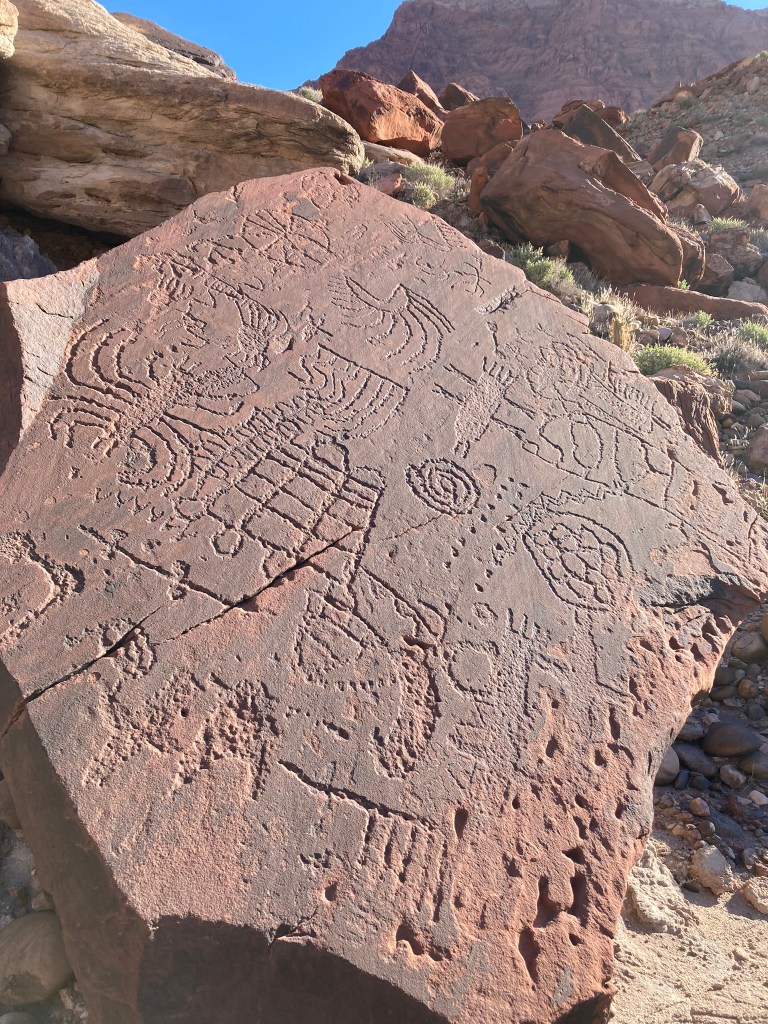
We completed the trail in the hot late morning sun in the desert, arriving at Lee’s Ferry and our car.
PRO TIP: The desert sun is brutal. With shade rare, sunscreen alone seems insufficient. We hiked in sun shirts with the hoods over our heads or, in my case, with a special hat with drapes around it to protect the neck. Hiking in the hot sun with long sleeve shirts, hoods, and sun gloves is not intuitive and seems too hot to be practical. However, it was comfortable and none of us got sunburned.
Death Hollow
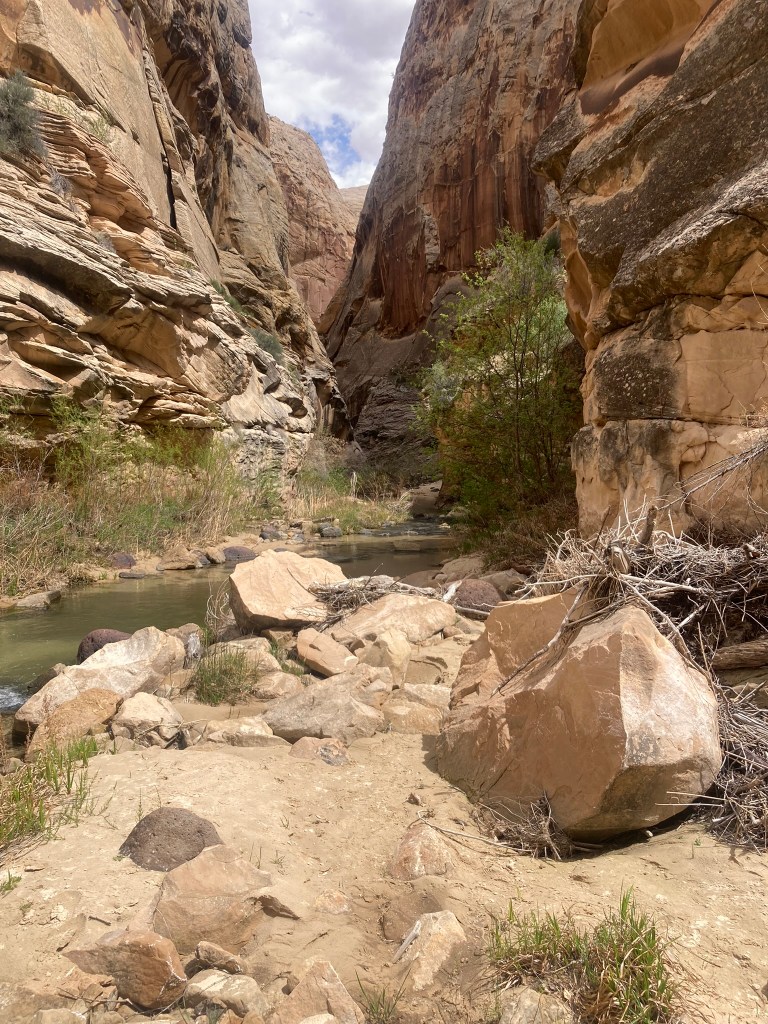
We spent the remainder of our trip on a series of overnight treks. The best trek was a loop down the Escalante river to Death Hollow Canyon, up Death Hollow to the Mail Trail, and then back to our cars at Escalante.
The Escalante portion of the trip was similar to that of Paria Canyon. However, I was able to rock hop each of the many river crossings. After a few miles, we reached the best part—Death Hollow Canyon.
When I told my wife, Kari (“Backpacker’s Widow”), of our plan for this leg of the trip she responded dryly, “maybe you should not hike a trail named Death Hollow?!?” And, why would you give me the trail name, “Backpacker’s Widow?!?” (I go backpacking once a month without her). As to her former question, she had a point. I rechecked the weather: there was still a 0% chance of rain. Having had the same concern as she when I first saw “Box-Death Hollow Wilderness” on the agenda, I researched the area to find out exactly how dangerous this could be. “Death Hollow” is so named not because many hikers die in flash floods while in the narrow Canyon, but because livestock high up on the plain atop the Canyon would occasionally fall down into the Canyon. When I told this to Backpacker’s Widow to assuage her she replied cheerfully “OK, make sure a cow doesn’t fall on you!” Yikes! This had not occurred to me. I was concerned about danger from flash floods, not bovine bombs. For a while, I would keep a weary eye to the top of the Canyon before concluding a cow falling on me would be unlikely.
The trail was exquisite. The narrow canyon walls were interesting. The stream through the Canyon was impossibly clear and inviting. As in the Buckskin Gulch portion of the Paria trail, we slashed upstream through the Mamie Creek until it became Death Hollow Creek at the top of the canyon. Our feet were constantly in the cool ankle deep water. At times, we contorted ourselves in yoga like positions to pass natural obstacles.

Toward the end of the day, we climbed steeply out of the canyon and camped on the slick rock overlooking it. Scorpion, Camel, and Baconator camped “cowboy-style” without tents. The mosquitos and stiff cold breeze chased Banchee and me into our tents. It gets cold at night in the desert!
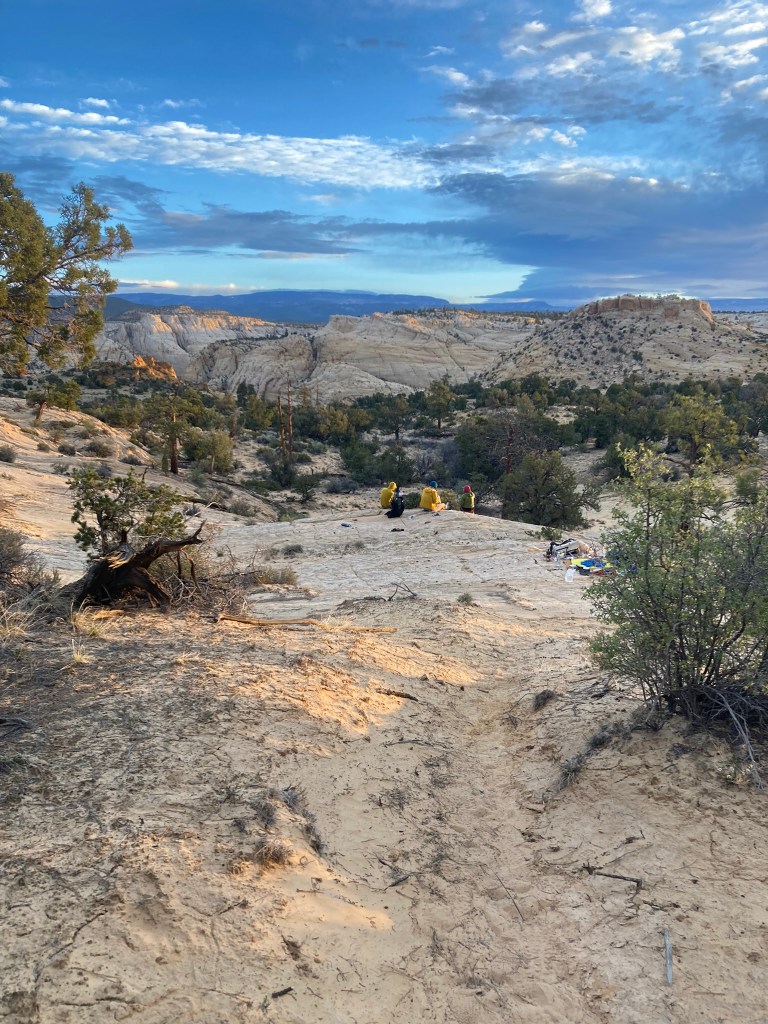
The next day, we took the Mail Trail back to our cars in Escalante. The Mail Trail runs between the towns of Escalante and Boulder. As the name suggests, postmen blazed the trail to deliver mail between them. Later, a telegraph wire saved people from this challenging trek. The telegraph wire remains to this day, albeit unused. This part of the trail featured our only significant elevation gain of the trip. After so many days of hiking on flat canyon bottoms, it was great to have the challenge. As my calves screamed on yet another slope of slick rock on our route up towards the sky, my heart raced from the physical effort. The enfolding views built and built. Too soon, we returned to our cars, ready for the next part of our trip.
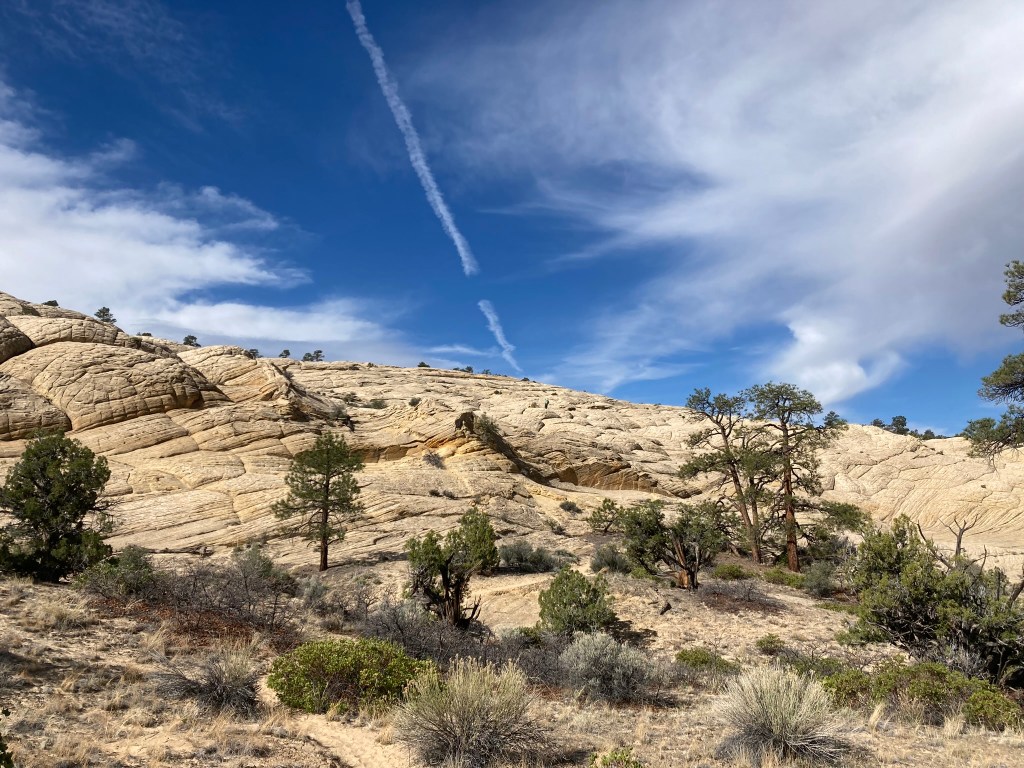

We took two other overnight treks—to Pine Creek Box and Harris Wash. Had we hiked these trails before Paria Canyon and Death Hollow, they would have been more impressive. The latter two are simply hard to top.
Pine Creek Box
Pine Creek, as the name suggests, is a trail along a creek through a pine forest. While it is still in a sandy desert, it was nice to see trees. With a cooler temperature than in the canyons, we enjoyed the break from the intense desert sun.
For a variety of different reasons, no one truly enjoyed this leg of our trip. Banshee just wanted a break from both hiking and, presumably, us. She set up her solo campsite just a few miles from the trailhead. Baconator, who loves his coffee so much that he actually wakes two hours before anyone else each morning to grind his own coffee beans, yelped in horror when he realized he left his coffee in the car. Camel kicked up a small cactus, uncomfortably sticking himself with millions of hair sized needles in his hands and legs that he had to remove by tweezer one by one. Scorpion and I suffered similar, albeit much lesser, cactus attacks of our own. After making camp 3/4 of the way up the canyon, we decided to skip our plan to hike to the end. In exchange, we could move our party to the nearby Harris Wash Canyon—an overnight trek impossible to complete if we did not turn around then and there. Baconator in particular enthusiastically embraced this new plan. I knew of his coffee obsession, but I hadn’t yet observed his complete coffee addiction until I saw him hike up to our cars, throw off his pack, rifle through the truck for his coffee beans, and squat between the two cars in the dusty ground to start making his coffee. Banshee, Camel, Scorpion and I stared at him slack jawed. The coffee shop was only FIVE MINUTES AWAY by car! We left him. The four of us piled into one of the two cars and drove to the coffee shop, so Baconator could perform his coffee ritual on his own time. As we drove off, dust kicked up from our car wheels leaving Baconator in a cloud as he stoically remained seated alone in the sandy parking lot behind his car brewing coffee. He later said it was his best brew of the trip.
Harris Wash Canyon
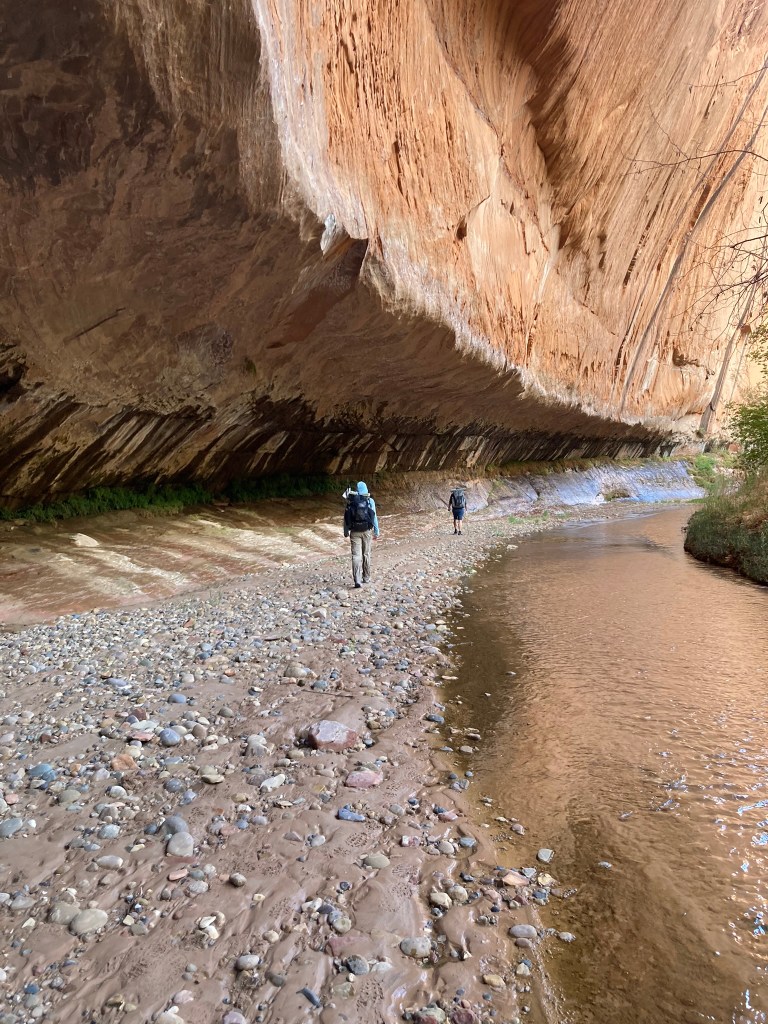
Harris Wash Canyon initially disappointed. It was like Paria-lite, similar to but not nearly as impressive as Paria. Worse, we saw the source of the Harris Wash stream we’d hike along, across, and through. It was clearly a popular cattle grazing area, with manure everywhere in various degrees of decay. I resolved right there and then to drink from this stream only as a last resort. I worried that my 2.5 liters of water was insufficient for this two-day trek in the desert, though. I hoped to find a running spring. I never did. The trek became a drudgery. I tired of constantly crossing and recrossing the wet wash only to bushwhack overland to the next crossing. Others clearly shared my thoughts. Eventually, only three of us pushed on to the terminus of this trail at the confluence with the Escalante River.

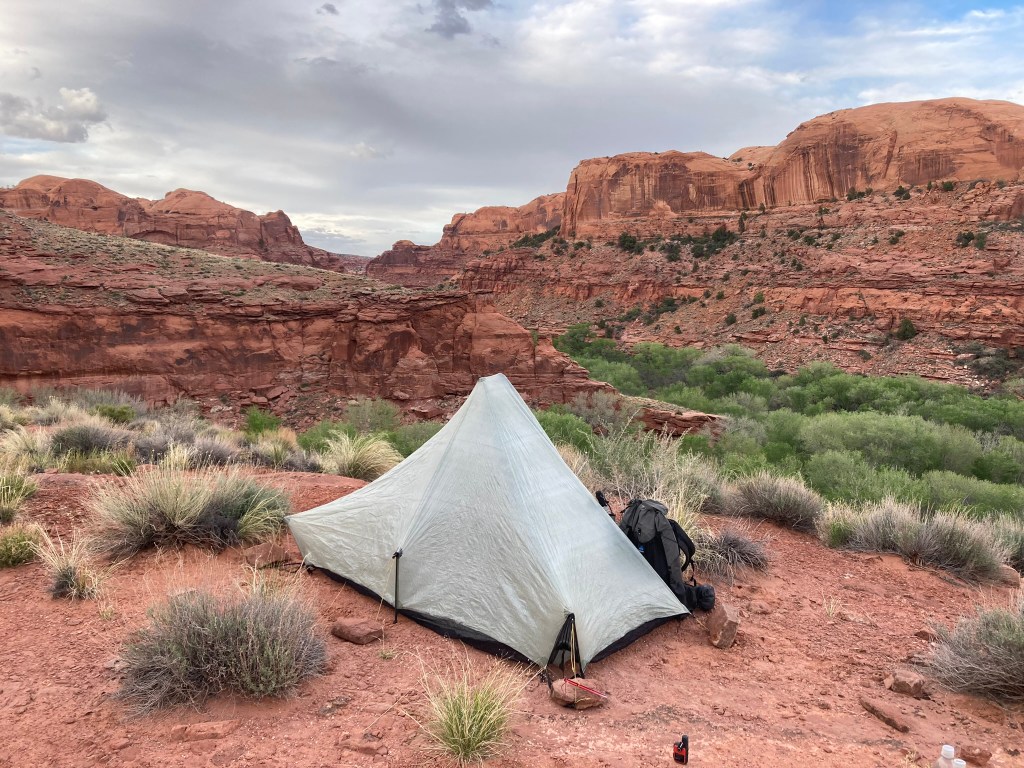
At this point, our experience dramatically improved. We discovered an epic campsite high up a mesa overlooking the intersection of the Harris Wash and Escalante canyons. Looking down into the canyons, we marveled at the green canopy of the trees that gilded the stream and river. The contrast between the lines of green vegetation against the red rocks and sand everywhere else was stunning.
Despite my utter disgust (do you see what I did there), I had to consume some of that “cow water” from Harris Wash. I’d been hoping to drink from the Escalante River, thinking it would be considerably cleaner. However, Camel sadly told me the Escalante was much more polluted! Deflated, I concluded that the risk of illness from “cow water” was much better than death by dehydration. I double filtered the water I drew from Harris Wash, then boiled it for 5 minutes, before using it to cook my ramen for dinner.
Initially, we planned to wake DCUL-style (before dawn) to try to minimize time in the hot sun. However, we reconsidered when we decided it was better to enjoy the sunrise from our terrific campsite. When we resumed hiking, we returned the way we came, this time up the canyon. Scorpion noticed the most scenic way to hike a canyon is to hike up one instead of down one. The views build better that way. I had to agree.
Vegas
With considerably more wilderness to explore than vacation days, it was time to leave. Breaking up the long drive back to Vegas with a short day hike up an extinct volcano, and another night camping on BLM land, we arrived back in Sin City eager for our first shower in 10 days and, for some of us, our first change in clothes. Our last act was a victory meal at a terrific Indian restaurant.
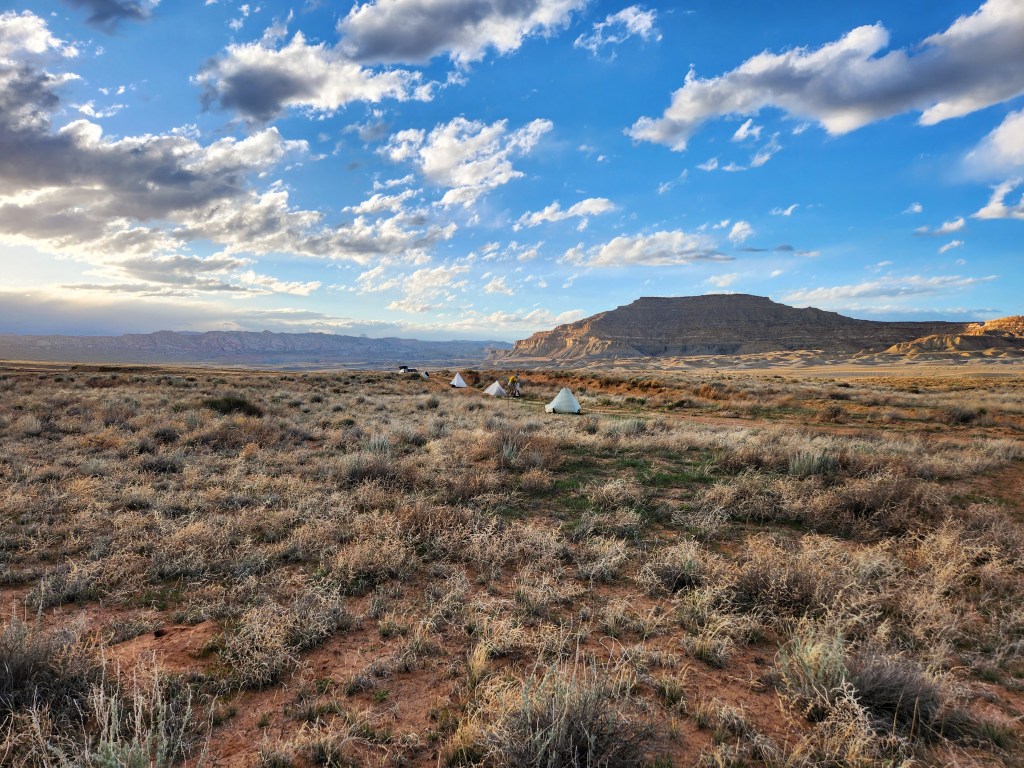
For those who love consistently wet feet and long walks on beach sand, this is the trip for you! Hiking through canyons in this area is physically very easy and remarkably scenic. It is a good place for a backpacking vacation. I just can’t believe we fell for our Paria Ranger’s “dry-foot” prank.
—David O (“Spider-Man”)
 DC UL Backpacking
Where did you park in/near Escalante for the Death Hollow overnight trip?
LikeLike
We parked in the trailhead lot behind the Escalente Cemetery just outside the town. (How is that for spooky? The “Death” Hollow loop starts and ends at a “cemetery”). A dirt road extends from the right corner of the cemetery lot that leads to two parking areas at the trailhead.
https://maps.app.goo.gl/oKNR9WhWz6FhD9Ma9?g_st=ic
LikeLiked by 1 person